
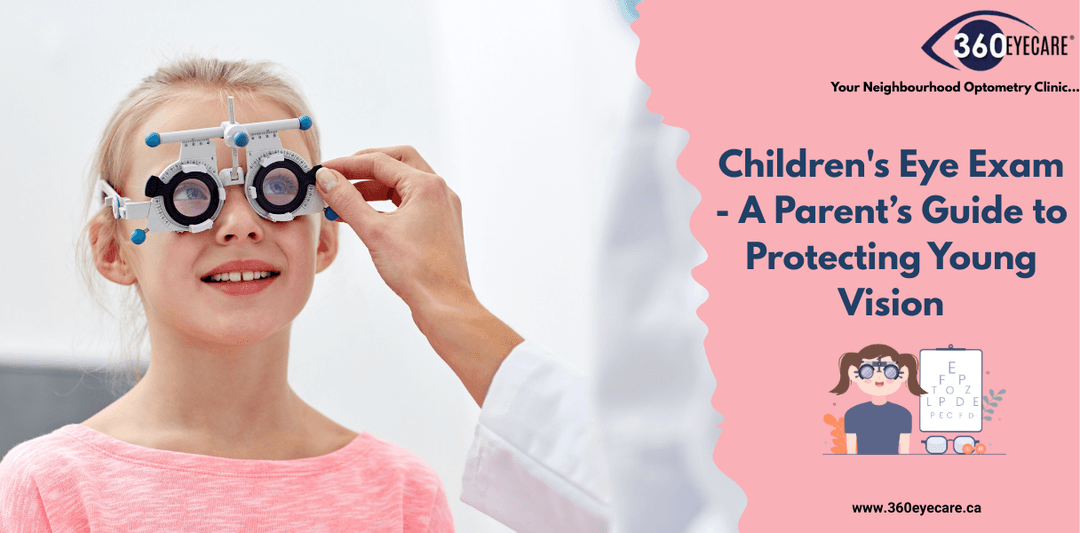
When should I bring my child for an eye exam?

With all the health issues that could confront children, parents often forget or dismiss eye health and visual acuity until it is right before their eyes—in the form of a visual impairment.
But according to the experts at the American Optometric Association, children should have their eyes examined by an optometrist by the time they are six months old. Follow-up checks should be made at the start of school and every two years after.
Many studies show that learning is 80 percent visual. This makes sense, as the eye is the window to the brain.
Our vision is our dominant sense. It impacts how we navigate our environment and our bodies. The optic nerve transmits visual information from the eye to the brain, where the information is interpreted.
If a young child can’t see well, they often can’t relay that information to their parents or caregivers. Parents and caregivers must operate on their behalf, since the visual system develops gradually over the first months of life.
When sight is impaired, a baby may have more than the usual difficulty crawling, grabbing, or coordinating their eye and hand movements. At a six-month eye exam, an optometrist will ensure that a child’s eyesight is developing properly.
They can also properly diagnose impairments and disorders such as strabismus (crossing or misaligned eyes) before they become a problem. Eye examinations are also particularly important for premature babies, as they can help determine visual impairment issues and a lifelong course of action.
As children grow and change, their perceptual abilities also change. Optometric exams can help rule out developmental delays or assist in treating delays related to optical issues and disorders. Some eye disorders, for example, can manifest with the same or similar symptoms to Attention Deficit Hyperactivity Disorder.
Some optometrists are specially trained in the diagnosis and treatment of these eye disorders. If parents or caregivers notice young children are unusually hyperactive, or are squinting, rubbing their eyes, sitting close to the television, or having difficulty following picture books, it may be time to set up an appointment for a comprehensive eye exam. Helping children to see clearly aids them in learn and enjoying learning as well.
For parents unsure where to start, searching for a trusted eye clinic near me can connect you with local optometrists who understand children’s unique eye care needs. A nearby clinic not only makes visits more convenient but also ensures ongoing support as your child’s vision develops.
Early checkups not only detect vision problems but also give parents peace of mind about their child’s overall development. If you’re looking for more insights into pediatric eye care in Toronto, you’ll find that these visits often highlight simple steps families can take to protect healthy vision from the very start.
Their years from age six to 18 include a lot of growing, learning, and doing. Regular eye exams for children in this age group can help detect disorders and visual impairments that manifest gradually. In today’s computer and electronic device-dependent world, many children are developing myopia or showing myopia-related symptoms from close use of computers and electronic devices.
Qualified optometrists in Toronto can diagnose impairments and provide treatment or eye-glass prescriptions to alleviate the effects. With more kids participating in sporting activities, concussion-related eye problems are more common as well.
Optometrists are uniquely qualified to assist in the treatment of visual disorders due to concussions. If your child is exhibiting symptoms such as headaches, reading avoidance, double vision, or if they are having difficulty tracking as they read, or focusing, make an appointment as soon as possible.
Share this article: