
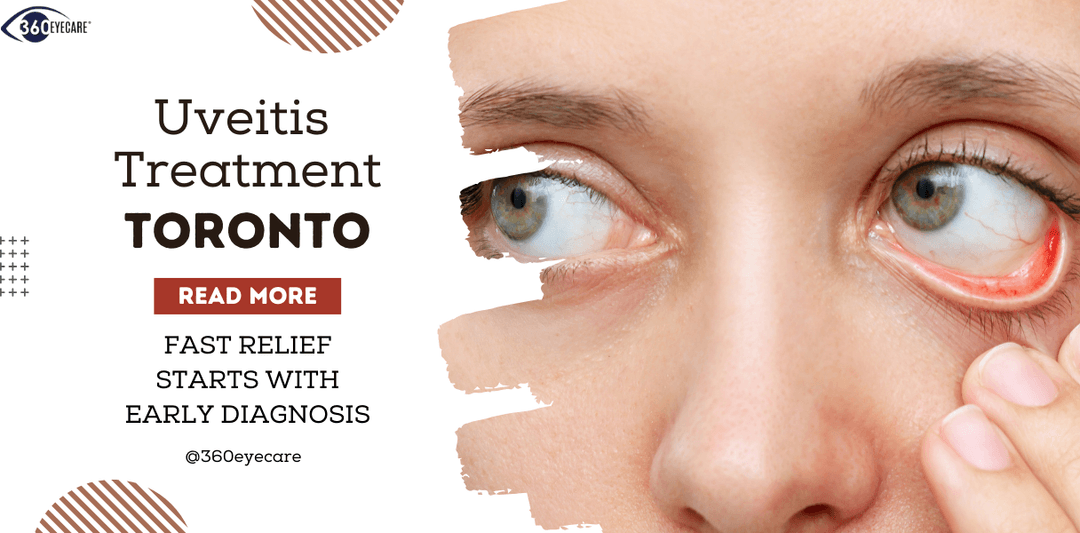
Uveitis is a serious eye inflammation that can damage your vision if left untreated. Many people don’t realize they have it until symptoms worsen.
If you’re experiencing eye pain, redness, or blurred vision, you need emergency eye care in Toronto fast. A Toronto optometrist can diagnose uveitis early, but treatment often requires specialized attention from an eye doctor.
Understanding uveitis and knowing when an eye inflammation treatment in Toronto becomes urgent could save your sight.
Key Takeaways:
- Uveitis is inflammation of the middle layer of your eye. It can cause permanent vision loss if left untreated.
- Watch for symptoms like eye redness, pain, blurred vision, light sensitivity, and floaters. Don’t ignore them.
- Causes range from autoimmune diseases and infections to eye trauma. Sometimes the cause is unknown.
- Untreated uveitis leads to glaucoma, cataracts, retinal damage, or blindness. Early treatment is critical.
- Diagnosis requires specialized tools like slit-lamp exams and OCT imaging. See an eye doctor quickly if you have symptoms.
What Is Uveitis?

Uveitis is inflammation of the uvea. The uvea is the middle layer of your eye. This layer sits between the sclera (the white part) and the retina. It includes the iris, ciliary body, and choroid.
There are different types. Anterior uveitis hits the front of the eye. Intermediate affects the middle. Posterior targets the back. Then there’s panuveitis, which inflames the entire uvea.
Some cases develop slowly. Others need emergency eye care in Toronto. Either way, a Toronto optometrist or eye doctor in Toronto needs to assess the damage quickly.
Without proper eye inflammation treatment in Toronto, uveitis can lead to glaucoma, cataracts, or permanent vision loss. Early diagnosis matters. So does the right uveitis treatment in Toronto.
What Causes Uveitis?

Uveitis has many triggers. a few are:
1. Autoimmune-Related Causes
Your immune system can turn against your own eyes. Conditions like ankylosing spondylitis (a type of arthritis affecting the spine) often cause anterior uveitis. Juvenile idiopathic arthritis does the same in children.
2. Infection-Related Causes
Herpes virus can inflame your uvea. Toxoplasmosis, a parasitic infection often from undercooked meat or cat feces, targets the back of the eye. Syphilis and tuberculosis, though less common today, still cause uveitis in some cases.
3. Trauma-Related Causes
Sports injuries, such as a basketball to the face or a car accident can trigger inflammation days or weeks later. Even eye surgery sometimes leads to post-surgical uveitis.
4. When the Cause Is Unknown
In many cases, doctors can’t identify the trigger. This is called idiopathic uveitis. It doesn’t mean the condition is less serious. A thorough medical assessment of blood tests, imaging, or detailed history helps rule out hidden causes and guide treatment.
What Are the Symptoms of Uveitis?

The most common symptom is eye redness. Pain follows. It can range from dull aching to sharp, throbbing discomfort that makes it hard to focus on anything else.
Blurred vision is another warning sign. You might notice it gradually or wake up one day struggling to see clearly. Light sensitivity often accompanies this.
Floaters are common too. They might seem harmless at first, but with uveitis, it means inflammation inside your eye.
Some people experience headaches. Others notice their vision dims or colors look washed out.
Symptoms vary depending on which part of the uvea is inflamed. Anterior uveitis tends to cause more pain and redness. Posterior uveitis might start with floaters and vision changes, but with less discomfort.
If you notice any of these symptoms, don’t wait. Uveitis treatment in Toronto starts with prompt diagnosis from an eye doctor in Toronto.
Is Uveitis Dangerous? What Can Happen If It’s Not Treated?

Yes. Uveitis is dangerous.
Without proper eye inflammation treatment in Toronto, the damage compounds.
One of the first risks is glaucoma. Inflammation increases pressure inside your eye, damaging the optic nerve.
Cataracts develop too. The lens clouds over, making everything look foggy or dim. Surgery can fix cataracts, but preventing them in the first place is better.
Then there’s retinal damage. Posterior uveitis can scar the retina or cause swelling in the macula — the part responsible for sharp, detailed vision. Once that’s damaged, reading becomes difficult, and driving becomes unsafe.
Permanent vision loss is the worst outcome. Some people go blind in the affected eye if uveitis goes untreated or treatment starts too late.
This isn’t about scaring you. It’s about reality. Uveitis doesn’t heal on its own.
You need an eye doctor in Toronto for specialized uveitis treatment in Toronto. If symptoms appear suddenly or worsen quickly, seek emergency eye care in Toronto immediately.
Your vision is worth protecting.
How Is Uveitis Diagnosed?

Diagnosing uveitis requires more than a quick look. An eye doctor in Toronto uses several tools to assess the inflammation and determine its severity.
1. Comprehensive eye exam
It starts with a comprehensive eye exam. Your Toronto optometrist checks your vision and examines the external structures of your eye.
2. Slit-lamp evaluation
The slit-lamp evaluation is critical. This microscope shows inflammation in the anterior chamber (the space between your cornea and iris). Your doctor can see cells floating in the fluid, a telltale sign of uveitis.
3. Dilated retinal exam
A dilated retinal exam follows. Drops widen your pupils so the doctor can inspect the retina, choroid, and optic nerve.
4. OCT imaging
OCT imaging provides cross-sectional images of your retina. It shows swelling or structural damage invisible to the naked eye. Retinal photographs document the condition for comparison during follow-up visits.
5. Visual acuity testing
Visual acuity testing measures how well you see at various distances.
6. Possible lab tests or referrals to rule out underlying systemic disease
Sometimes lab tests are necessary. Blood work can reveal autoimmune diseases or infections triggering the inflammation. Your eye doctor in Toronto might refer you to a rheumatologist or infectious disease specialist to address underlying causes before starting uveitis treatment in Toronto.
Uveitis Care in Toronto: Why Choose 360 Eyecare?
360 Eyecare offers comprehensive eye inflammation treatment in Toronto with advanced diagnostic technology. Our team includes experienced eye doctors who specialize in complex conditions like uveitis.
We provide same-day appointments for urgent cases. If you need emergency eye care in Toronto, we prioritize your situation.
Our Toronto optometrists work closely with specialists, such as rheumatologists, immunologists, and retinal surgeons when necessary. We coordinate your care so nothing falls through the cracks.
Early detection saves vision. We’re equipped to diagnose uveitis accurately and start uveitis treatment in Toronto immediately.
Your eyes deserve focused attention. Book an eye exam today.
Conclusion
Uveitis isn’t something you wait out. It’s serious. It’s treatable. But only if you act fast.
If you’re experiencing eye pain, redness, or vision changes, contact an eye doctor in Toronto immediately. Early intervention protects your sight.
Don’t risk permanent damage. Get checked today.
FAQs
Q: Can uveitis go away on its own?
No. Uveitis requires treatment. Without it, inflammation worsens and can cause permanent vision damage. See an eye doctor immediately if you have symptoms.
Q: How long does uveitis treatment take?
It depends on the cause and severity. Some cases resolve in weeks with eye drops. Others need months of treatment or ongoing management.
Q: Can uveitis come back after treatment?
Yes. Recurrent uveitis is common, especially with autoimmune conditions. Regular follow-ups with your eye doctor help catch flare-ups early and prevent complications.
Q: Is uveitis contagious?
No. You can’t spread uveitis to others. Even when caused by infections like herpes, the eye inflammation itself isn’t contagious through normal contact.
Share this article: